
Are Casino Streamers Playing With Real Money or Selling a Different Reality?
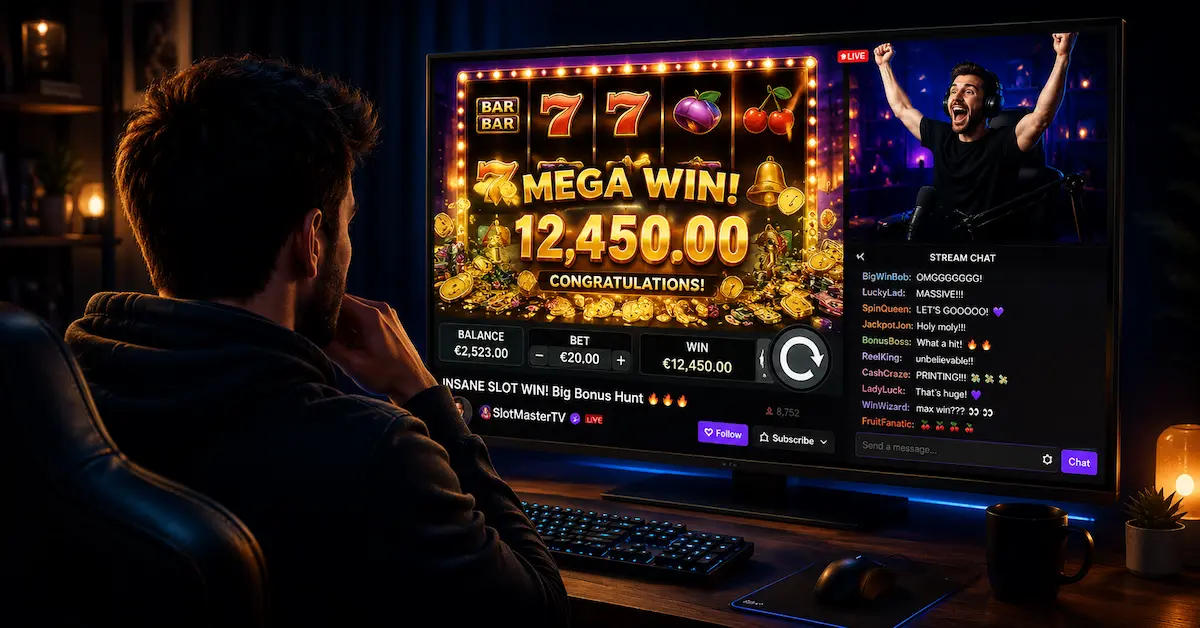
Casino streaming looks simple from the outside. A streamer opens a slot, bets massive money, reacts to an insane bonus, hits a huge win, and thousands of people watch it happen live.
But the real question is not only whether casino streamers play with real money. The better question is this: are they playing under the same conditions as a normal player?
That is where the conversation becomes more interesting, because most people argue about this topic in the wrong way. One side says every streamer is fake, while the other side acts like there is nothing to discuss.
Both answers are too lazy. Some casino streamers may use real money, some may use sponsored funds, and some may use bonus balance, affiliate deals, cashback, rakeback, or structures that make their risk very different from the risk of a normal player.
That does not automatically mean every stream is fake. It means the viewer should understand that casino streaming is not always normal gambling with a camera on top.
Casino streaming is content, marketing, entertainment, affiliate business, and gambling all mixed together.
Are Casino Streamers Playing With Real Money?
Sometimes yes. Sometimes no. Sometimes partly. And sometimes the real question is not whether the money is technically real, but whose risk it actually is.
A normal player deposits their own money. If they lose, that money is gone. There is no audience paying them for the session, no affiliate income behind the scenes, and no content value from losing dramatically in front of thousands of viewers.
For a streamer, the picture can be different. The account may be real, the casino may be real, the slot may be real, and the win may even be real, but that still does not mean the session is financially the same as your session.
A streamer can have a deal with a casino. They can be paid to play, earn from referrals, receive cashback or rakeback, get deposit bonuses that normal players never receive, and make money from views, clips, sponsorships, and audience growth.
That changes the risk completely. If a normal player loses $5,000, they lost $5,000. If a streamer loses $5,000 during a sponsored stream but earns from the stream, the referrals, the deal, or the content itself, the loss does not function the same way.
That is the part viewers often miss. The biggest issue is not always fake money, because the biggest issue is hidden context.
A viewer sees the balance, the bet size, the bonus, and the reaction. They do not always see the deal behind the session.
What Does Fake Balance Actually Mean?
Fake balance does not always mean what people think it means. When people say fake balance, they usually imagine a completely fake demo account where nothing is real.
That can exist, but the topic is broader than that. Fake balance does not always mean the slot is fake, because it can mean the money does not carry the same risk as personal money.
A demo balance is the clearest version. The streamer is not risking real money, and the session is basically entertainment using casino visuals.
A sponsored balance is different. The account may function inside a real casino environment, but the money may be provided by the casino or connected to a promotional deal.
A bonus balance can also change the psychology. The streamer may technically be playing with money attached to wagering terms, but it is not the same as a normal player depositing salary money from a bank account.
Then there is the more subtle version: real balance with reduced risk. The streamer may deposit, but also receive cashback, rakeback, affiliate income, or a fixed payment that changes the real financial pressure behind the session.
That is why the phrase casino streamers playing with real money can be misleading. A real account does not always mean real risk.
A streamer might still lose. The balance might still go down. The slot might still be running normally, and the slot RTP might still be the same, but the cost of that loss may be reduced by business arrangements that the viewer does not see.
For the viewer, this matters because the stream creates emotional comparison. You watch someone spin $100, $500, or $1,000 like it is nothing, survive swings that would destroy a normal bankroll, and laugh through losses that would hurt a regular player badly.
And because the balance is on a screen, your brain starts normalizing the size of the action. That is where fake balance becomes more than a technical issue, because it becomes a perception issue.
Why Do Casino Streamers Bet Such Large Amounts?
Casino streamers bet insane amounts because their economy is not the same as a normal player’s economy.
For a normal player, a $100 spin is pure risk. If it loses, the money is gone, and there is no secondary value, no audience, no content, no sponsor, no referral income, and no business model around the loss.
For a streamer, a huge bet is part of the show. Big stakes create tension, tension creates reactions, reactions create clips, clips create views, views create followers, followers create traffic, and traffic creates money.
That does not mean the streamer cannot lose. It means the bet has more than one purpose.
A normal player bets to win money. A streamer may be betting to win, but also to entertain, retain viewers, build a brand, generate clips, drive sign-ups, and justify the next stream.
That completely changes the logic of the stake. A streamer spinning huge money is not necessarily showing what they personally believe is smart bankroll management, because they are showing what creates attention.
Attention is the real product. A normal player who copies that behavior is copying the risk without copying the business model behind it.
A streamer can lose money and still make content.
A normal player just loses money.
That is the dangerous part, because the viewer sees the spin but does not inherit the structure behind the spin.
How Do Casinos, Providers, and Streamers Benefit From Each Other?
This part needs to be explained carefully, because it is not about secret rooms or conspiracy theories. It is about business incentives.
Casino streaming sits inside an ecosystem. The streamer needs content, the casino wants traffic, the provider wants exposure, and the viewer wants entertainment.
Everyone has a role. The casino benefits when viewers click links, register accounts, deposit money, and play, while the streamer may benefit through affiliate deals, sponsorship payments, referral revenue, or audience growth.
The provider benefits when its slots appear in dramatic clips, huge bonus hunts, max win videos, and viral reactions. None of that automatically means the game is fake.
It means the stream is not neutral. A casino stream can look like a player casually gambling for fun, but underneath it may also function as marketing.
That does not make it illegal by itself. Affiliate marketing exists in many industries, sponsorships exist everywhere, and the problem is not that business exists.
The problem is that many viewers do not emotionally process it as marketing. They process it as proof.
They see the streamer win big and think: this casino pays, this slot is hot, this bonus buy can hit, and this is what gambling looks like if you have courage.
But a stream is not an average player session. It is a selected, amplified, monetized version of gambling.
Transparency matters. If a streamer is sponsored, viewers should know; if a balance is provided, viewers should know; if a link is affiliate, viewers should know; and if the risk is not the same as a normal deposit, viewers should know.
The issue is not that the business model exists. The issue is when the viewer does not realize they are sitting inside that business model.
Why Do Streamer Wins Look So Different From Normal Player Sessions?
Streamer wins look different because you are rarely watching gambling the way a normal player experiences it.
You are watching volume, selection, and spectacle. A normal player might deposit $100, play for one hour, hit nothing serious, and leave.
That is the reality of most sessions. It is quiet, slow, frustrating, and often forgettable, which means it does not make good content.
Streamer content is built around moments: big bonuses, big buys, big reactions, big swings, big wins, and big losses.
Even when streams are live, the moments that travel across social media are selected. Nobody shares ten hours of dead spins with no story, because they share the insane bonus, the max win, the x10,000 hit, or the streamer screaming at the screen.
That changes the viewer’s perception completely. You are not seeing the average, you are seeing the memorable.
That is the same reason gambling clips are so powerful. A 45-second clip can make a slot look explosive, but it does not show the hundreds or thousands of spins that may have happened before that moment.
The viewer remembers the hit. The platform rewards the hit. The algorithm spreads the hit. And the boring truth disappears.
That is why streamer wins can look like normal gambling turned up to maximum volume. But for the regular player, copying what they see on stream is copying the most dangerous part of the experience without the money, structure, or content income behind it.
My Take
I started watching casino streamers for a reason.
When I got into this, I wanted to understand slots from every angle. My own sessions gave me one picture, while streamers gave me another, not because I trusted them blindly, but because I wanted to see how different operators, providers, and games looked from the outside.
That was the value for me. I could see how bonuses open on camera, how a provider I never played looks at a stake I never use, and how certain games behave when pushed harder than I would ever push them myself.
Then I started noticing the pattern.
Most casino streaming content follows roughly the same formula. They scream at max wins, perform frustration when the session goes dead, and build the whole session around energy, reaction, and attention.
Some have real charisma, some are boring, and some are obviously more entertaining than others. But the core format is usually the same: the energy is built for content, not for a normal player’s emotional reality.
Some may benefit from inflated visibility, and some may have deals so strong that the real financial pressure behind the session is nothing like what the viewer imagines.
So do I think casino streamers play with real money?
Does it matter?
If you watch streamers for entertainment and enjoy it, that is what they are there for. They are there to hold your attention and, at the end of it, get you to register on their code.
Are casino streamers fun to watch? Yes, they can be. The noise, the wins, the reactions, the big bonus buys, the chaos, all of it can be entertaining.
Can watching streamers be dangerous? Yes, absolutely. Because someone watching at home can see a streamer buy a $10,000 bonus, see a clip where it pays half a million, and start believing the same thing is waiting for them if they just have the courage to press buy.
That viewer does not have the same bankroll, the same deal, the same safety net, or the same business model behind them. They have savings, emotions, and a screen in front of them.
That is how someone can go from watching entertainment to risking money they cannot afford to lose.
If you are entertained, you may register regardless of whether the balance was personal, sponsored, protected, or supported by a deal behind the screen.
But here is the question nobody asks themselves honestly. If you woke up tomorrow and found out a major casino streamer was not risking personal money at all, but playing with casino-funded balance under a private deal, would your behavior actually change?
Or would you keep watching anyway?
Think about that.
Ask yourself something else. If you personally received 20 million dollars today, would you sit in the same chair tomorrow and spin the same slots all day?
Most people would not. They would open a business, buy real estate, buy stocks, invest in something, protect the money, or build something that does not depend on spinning reels again tomorrow.
So when someone can win or handle numbers like five million, ten million, or twenty million, and then return the next day to keep spinning like nothing happened, the viewer should at least ask what structure makes that possible.
Maybe the full balance is not really theirs in the way the viewer imagines. Maybe only a small percentage of the action is truly personal. Maybe the casino covers part of the downside. Maybe the streamer receives cashback, rakeback, loss coverage, or affiliate income that brings money back through another door.
I am not saying every streamer has the same deal. I am saying a normal viewer should not assume that the risk on screen works like the risk in their own account.
The money going out one door can come back through another.
What bothers me is not the business model. The business model is what it is.
What bothers me is the part where a streamer starts acting like a gambling therapist.
Someone types in chat: watching your stream is keeping me away from gambling, I stopped playing because I watch you instead, this is my therapy.
And the streamer responds: glad to hear it, keep watching, do not gamble, just watch me.
That is not therapy. That is a child standing in a sweet shop, staring at ice cream, telling themselves they don`t want it.
The craving does not go away. The association does not disappear. The slot is still on the screen.
If you genuinely want to stop gambling, the answer is not to replace gambling with watching gambling. The answer is to remove every connection to it: no streams, no sites, no clips, no nothing.
If that is where you are, start with how to quit gambling instead of trying to use gambling content as a substitute for gambling.
I can say that clearly because I built this site knowing exactly what it is. GoatBetZone exists to educate, explain psychology, show mechanics, and talk about reality, not to push you toward the next deposit.
Streamers serve a different purpose. They can be useful for learning about games you have never played, seeing how a bonus opens, or understanding a provider you are curious about without spending your own money on it.
That is a legitimate use. But if you catch yourself watching to feel the rush, or watching because it feels close enough to playing, step back.
The viewer sees the spin.
They do not see the deal behind the spin.
Final Thoughts
Not every casino streamer operates the same way. Some are more transparent than others, some may take real personal risk, and others may have arrangements that make their sessions look nothing like what a normal player experiences.
The smart position is not to call every streamer a fraud. The smart position is to ask better questions.
Is the money personal? Is there a sponsorship deal? Is the loss actually recovered somewhere else? Is this entertainment, marketing, or both at once?
Most of the time it is both.
Casino streaming can be entertaining. It can even be useful. But it should never be treated as a realistic guide for how normal players should gamble.
The experience on screen is not the same sport.
Need Help?
If gambling is affecting your finances, relationships, mental health, work, or daily life, reach out. Asking for help is not weakness — it is control.
BeGambleAware — begambleaware.org
GamCare — gamcare.org.uk
Gambling Therapy — gamblingtherapy.org