
Can Online Casinos Control Slots or Is That Just a Player Myth?
Every slot player eventually asks the same question. Can an online casino control the slot, or is that just something players say after a brutal session?
I had one of those sessions that makes the question feel very real. I was down badly, playing three different slots, and all of them felt completely dead. Not quiet in a “maybe something is close” way, but quiet in that ugly way where you already feel how the session is going to end.
Then the casino dropped a $2 freebet into my account. Nothing serious, just a small promo balance that most players would barely think about. I opened the first slot, pressed spin, and the bonus landed on the first spin.
This time, the bonus actually opened properly. It paid something real. Then I moved to the second slot, and the same thing happened again. Later, the third slot also woke up.
From a $2 freebet, the balance climbed to around $1,200. For a moment, it felt perfect. The dead session turned around, the slots finally paid, and the tiny promo somehow turned into serious money.
Then I hit the cashier.
Around $1,100 disappeared. The screen updated, and I was sitting at $100. I contacted live chat, and they told me the promotion had a maximum win cap.
I went back and read the terms properly this time. It was there, buried inside the promotion details: maximum withdrawal from this freebet was $100.
The slot paid big. The casino terms cut it down. That is what this article is really about.
Who Actually Controls the Slot?
Before blaming the casino for every dead session, you need to understand what is actually running the game. The provider builds the slot, designs the math, creates the mechanics, sets the payout model, and controls the technical game logic.
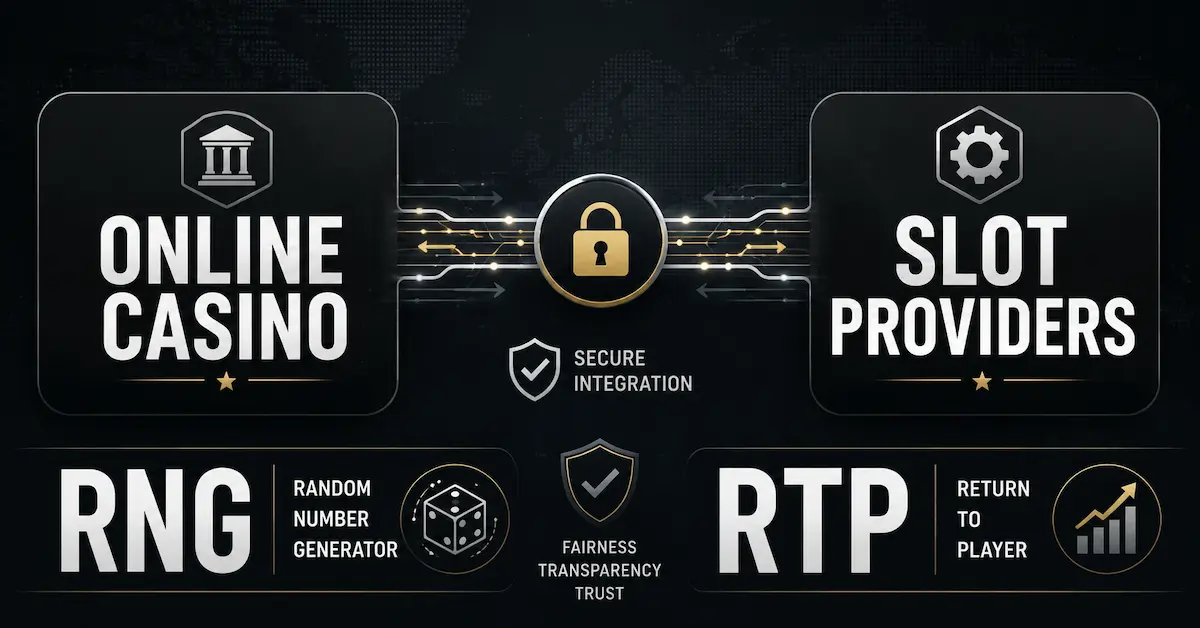
Providers like Pragmatic Play, Hacksaw Gaming, Nolimit City, PG Soft, Play’n GO, Relax Gaming, and Push Gaming do not simply send a picture of a slot to a casino. They deliver a complete game system built around RNG, which means Random Number Generator, the system that produces independent game results.
The game may run through the provider’s own technical setup or through an RGS, which means Remote Gaming Server. In simple terms, the RGS is the engine layer that delivers the game, connects it to the casino platform, handles communication, and keeps the game session running.
The casino is on the other side of that setup. It integrates the game, places it in the lobby, gives players access to it, and wraps it inside its own payment system, account rules, bonus terms, and promotional structure.
The clean way to say it is this: the provider controls the spin result, while the casino controls the conditions around the spin. That difference is where most player confusion begins.
Can a Casino Change the Result of Your Spin?
At a licensed casino running a certified game from a real provider, the answer should be no. The casino is not supposed to have a button that says “make this player lose” or “give this player a bonus now.”
The RNG runs inside the certified game system. Certification exists exactly to stop the operator from reaching into the game and changing outcomes whenever it wants.
If a casino could override spin results on demand, the whole testing and certification structure would become meaningless. Serious providers would also be risking their licenses, commercial relationships, and reputation for something that would destroy trust in their entire business.
But there are two important details. First, this protection only means something if you are playing a legitimate provider game at a serious operator. Weak platforms, fake games, clone builds, and unverified casinos are a completely different problem.
Second, not being able to change your spin result does not mean the casino has no influence over your experience. It simply means the influence usually sits somewhere else.
The casino probably does not control the spin. It controls the environment around the spin.
What Online Casinos Can Actually Control
This is where most players have the wrong picture. An online casino may not control the exact RNG result, but it controls much more than players usually think.
Casinos can choose which providers to offer, which games appear on the homepage, which slots get promoted, which games qualify for bonuses, and which titles are hidden deep inside the lobby. That alone shapes the way players behave.
They can also choose which RTP version of a game to offer when the provider makes multiple versions available. RTP means Return to Player, the long-term theoretical percentage a game is designed to return across huge volume, not across one personal session.
Some slots can exist in different mathematical configurations. One casino may offer a higher RTP version, while another may offer a lower one, depending on provider options, market rules, and commercial agreements.
The game may look identical from the outside, but the RTP shown inside the game information menu can reveal which version is actually running. That does not mean the casino is changing your personal spin. It means the version of the game may have been configured differently from the start.
Casinos can also set bonus rules, max bet limits during bonus play, withdrawal limits, free spin caps, promotion conditions, restricted games, country restrictions, and account verification rules. None of that changes the RNG, but all of it affects what your session becomes.
The Bonus Cap: The Move Nobody Talks About
What happened to me with that $2 freebet is a clean example of how casino control actually works. The casino did not need to interfere with a single spin.
The slots ran, the bonuses opened, and the wins appeared. From the player side, everything looked real because the screen showed real wins and the balance moved like real money.
But the promotion had a maximum win cap. That one line in the terms changed everything.
If the freebet lost, the casino lost only $2. If the freebet produced a huge win, the casino paid only the capped amount and removed the rest. That makes the promotion extremely low risk for the operator.
This is the real lesson. The casino does not need to control your spin to control your outcome. It only needs to control the rules around your spin.
The slot hit. The casino still won.
RTP Versions: The Part Players Miss
RTP versions deserve their own section because this is one of the biggest things players misunderstand. When a slot says 96.5% RTP somewhere online, players often assume that number is fixed everywhere.
For some games, it may be. For others, the provider can offer several RTP versions. The same title can sometimes exist at 96%, 94%, 92%, or even lower, depending on the provider, operator, and market.
This does not mean the casino is adjusting your individual spin while you play. It means you might be playing a different mathematical version of the same slot from the beginning.
That is one reason the same slot can feel different across different casinos. Sometimes it is only variance, but sometimes the actual RTP version may not be the one you assumed.
The best move is simple: open the game information menu and check the RTP inside the slot itself. If the number is lower than the version you expected, at least you know what you are dealing with.
The Provider and Casino Relationship
Providers and casinos do work together, but not in the cartoon way players imagine. They cooperate through integrations, revenue share agreements, game delivery, launch campaigns, compliance, tech support, and sometimes exclusive content.
A provider wants distribution. A casino wants games that players already know or want to try. That relationship is commercial, technical, and regulatory.
What it should not include is manual control over individual player outcomes. A serious provider has too much to lose by building a secret lever for one casino to drain one player.
The real relationship is colder and more businesslike. The provider supplies the game. The casino supplies the audience, the lobby position, the payment flow, the promotions, and the rules around the player account.
That is why the provider may run the game fairly, while the casino still creates a promotion that feels unfair after the win lands.
Why It Feels Personal When You Lose
Randomness feels personal when your own money is on the screen. After enough dead spins, the brain starts looking for a reason because silence from the slot feels like something is happening against you.
Maybe the casino changed something. Maybe the provider made the game colder. Maybe the slot is punishing you because you withdrew last week. Those thoughts sound ridiculous when you are calm, but they can feel very real during a losing session.
Most of the time, the answer is simpler and more frustrating: variance. A high volatility slot can go long periods without meaningful returns, and that does not automatically mean manipulation.
The specific trap in my story is even stronger. You lose for a long time, the casino gives a small freebet, and then suddenly the same slots wake up. Emotionally, it feels like the casino knew the games were about to pay.
But the slot did not owe me anything. RTP is not a personal debt. The previous losses did not force the next bonuses to land.
What the casino did know was different. It knew that a small freebet with a max win cap creates excitement while limiting the operator’s risk.
The Real Risk Is Often Outside the Real Game
The biggest manipulation risk is usually not inside a properly delivered Pragmatic Play, Hacksaw Gaming, PG Soft, or Relax Gaming slot. The bigger danger is weak operators, fake builds, clone games, and unverified platforms.
Some shady sites use games that look like real provider titles but are not delivered through the official provider system. Once that happens, normal assumptions about RNG testing, certification, and game math become much weaker.
Before worrying that a serious casino is secretly controlling a real provider, first check whether the game itself is authentic. Does the game info show the real provider? Does the casino have a recognised license where applicable in your region? Does the game load from a real supplier environment?
This is one reason I prefer players to start from better researched casino pages rather than random links from Telegram groups, social comments, or fake bonus ads. A proper crypto online casino still needs to be checked, but at least the review process should start with provider access, payment reputation, and visible terms.
If the answers are unclear, the problem may not be the slot running cold. The problem may be that the entire environment is weak.
What Players Should Check Before Taking a Bonus
The most important thing is not only which slot you play. It is what rules apply before you even press spin.
Before accepting any freebet, free spins, bonus balance, cashback, reload offer, wager-free promo, or mystery reward, check the maximum cashout. That is the rule that can turn a huge win into a tiny withdrawal.
Also check wagering requirements, max bet limits, restricted games, expiry time, mixed bonus and cash balance rules, verification conditions, and whether winnings from the promo are capped.
A $2 freebet with a $100 max win is not really a chance at unlimited profit. It is a capped promotional experience.
That does not mean every promotion is bad. It means the player needs to understand the ceiling before celebrating the win.
My Take
My take is simple. I do not believe serious providers are sitting with casinos and deciding when one player should win or lose.
That idea is too simple and usually aimed at the wrong target. A provider with a real license, real distribution, and a serious reputation has too much to lose by giving a casino secret control over individual players.
But I also do not think casinos are passive shops that simply display games and have no influence over what happens to the player. They control a lot.
They control the lobby. They control the promotions. They control bonus terms, max win caps, payment rules, verification pressure, game visibility, and which offers appear in front of which players.
What happened to me was technically clean. The promotion had terms, the cap was written down, and I did not read it carefully enough.
That does not make it feel any better. It just shows where the real game was being played. Not in the RNG, but in the terms document I scrolled past.
The provider did not have to cheat me.
The casino did not have to break the slot.
The trap was already sitting inside the promotion terms.
Final Thoughts
Can online casinos control slots? In a proper licensed setup, they should not be able to control individual spins or tell the provider when to make you win.
The provider controls the game system, RNG, and math. The casino controls the environment around the game.
That environment includes promotions, max cashout limits, bonus rules, game selection, lobby placement, RTP versions where available, payment flow, and the whole path from spin to withdrawal.
The casino probably did not know the slot was about to pay. The provider probably did not return RTP personally to me.
But the casino did know one thing before I clicked spin: if I won too much from that freebet, the terms would protect them.
That is why the smartest question is not only “can the casino control the slot?” The smarter question is: what rules control my money after the slot pays?
Because sometimes the spin is fair, the win is real, and the trap is still waiting in the terms.
If gambling is starting to feel like something you cannot control, visit GambleAware for free support and advice.