
Does the Martingale Strategy Actually Work or Just Destroy Your Bankroll?
The Martingale Strategy looks smart until the first real losing streak arrives. Then it stops being a system and becomes a bankroll emergency.
The idea has been around for centuries, and it still attracts bettors because the logic sounds unbreakable. You cannot lose forever. One win recovers everything. Simple.
Except it is not.
What Is the Martingale Strategy?
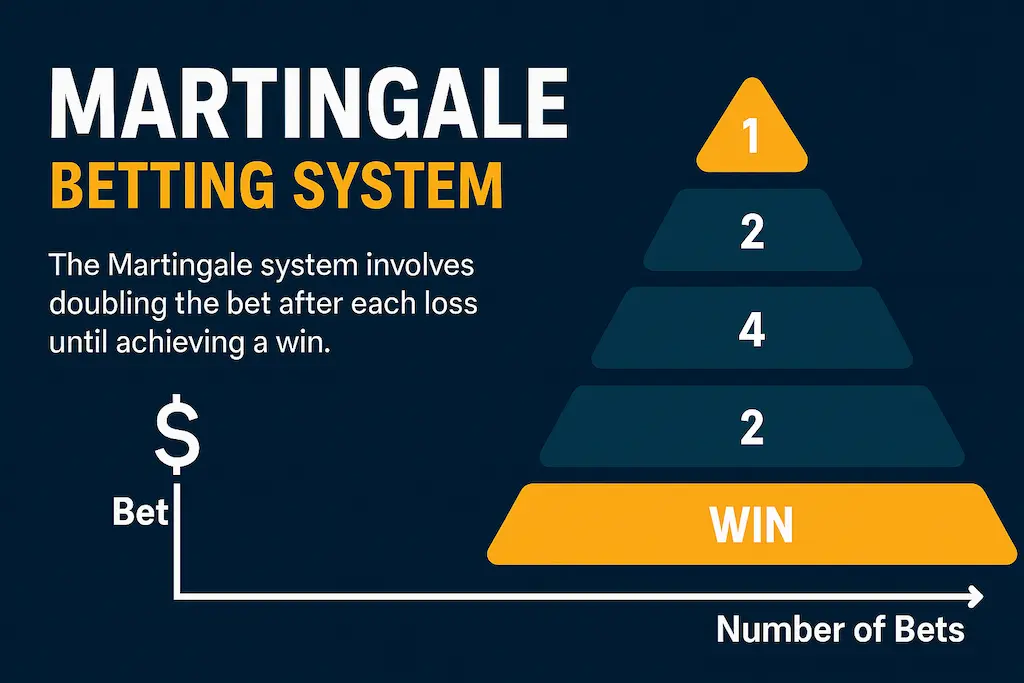
The structure is straightforward. You start with a base bet. If you lose, you double the next stake. Lose again, double again. In the classic even-money version, the theory is that one eventual win recovers all previous losses and returns the original profit.
A basic example: you start with a ten dollar bet.
Bet one: ten dollars, lose.
Bet two: twenty dollars, lose.
Bet three: forty dollars, lose.
Bet four: eighty dollars, win at odds of 3.20.
You get back 256 dollars.
You lost 70 dollars before the win, but the return gives you a net profit of over 100 dollars. On paper, that looks like a working system.
In roulette, the same logic is used constantly. Players bet on red every spin and double when black appears, convinced that the same color cannot keep winning forever. Technically correct. Practically dangerous.
Want to see what the progression looks like with your own odds and bankroll? Use our Martingale Calculator to calculate the next stake, cumulative losses, and bankroll required.
For a broader comparison with Fibonacci, D'Alembert and Labouchere, read our Betting Systems Explained guide.
Why the Martingale Strategy Looks So Tempting
It feels logical. You cannot lose indefinitely. One win brings everything back. The math does not lie.
That is exactly the problem. The math works in a world with no stake limits, no bankroll limits, and no psychological breaking point. None of those worlds exist.
Short term, the system can produce small consistent wins, and that creates an illusion of control. Bettors remember the ten sessions where Martingale worked and forget the one session where it collapsed.
How Bettors Use Martingale in Sports Betting
The most common application is chasing draws. Bettors target leagues where draws are frequent, such as Serie A in Italy, low scoring competitions, or teams with a history of shared points.
The logic sounds simple: if Torino or Verona draw often, keep doubling the draw bet until it lands. Eventually it must happen.
And yes, eventually it does. But the word eventually is where the system breaks.
Why the Martingale Strategy Fails in Real Life
The Martingale does not fail because the math is wrong. It fails because real bankrolls are limited, real stake limits exist, and real people panic when the numbers stop feeling normal.
After seven consecutive losses on a ten dollar base bet, the next stake in a classic doubling progression is 1,280 dollars. Most bankrolls cannot survive that sequence.
Most people also cannot psychologically handle placing a four figure bet after seven straight losses. That is not strategy anymore. That is pressure.
Every match is also an independent event. Torino drawing three times in a row does not make the fourth match more likely to end in a draw. The odds do not shift because of history.
The bookmaker does not care about your losing streak. Sportsbooks and casinos may impose maximum betting limits, and by the time you need the system most, those limits can stop the progression.
A Real Example: Chasing Draws Until the Numbers Get Ugly
Bet one: Torino vs Lazio, no draw, ten dollars lost.
Bet two: Fiorentina vs Roma, no draw, twenty dollars lost.
Bet three: Verona vs Bologna, no draw, forty dollars lost.
Bet four: Napoli vs Inter, no draw, eighty dollars lost.
Bet five: Atalanta vs Milan, 160 dollars on the draw at odds of 3.10. The draw lands and 496 dollars is returned.
The first four losing bets cost 150 dollars. After adding the 160 dollar winning stake, a total of 310 dollars has been staked across the sequence. The 496 dollar return leaves a net profit of 186 dollars.
At odds of 3.10, blindly doubling actually over-recovers the earlier losses because the winning price is much higher than even money. But that does not make the progression safe.
If the first nine bets all lose, the bettor has already lost 5,110 dollars and the next required stake under a simple doubling progression is another 5,120 dollars.
That is the deal Martingale offers when it goes wrong: the next stake can become enormous long before the losing streak feels impossible.
Why Losing Streaks Break the System
Losing streaks happen more often than people expect. Eight consecutive non-draws in a football league is not rare, and ten consecutive outcomes against your roulette bet is not impossible.
These sequences feel impossible until they are happening to you.
The system is designed to survive variance. The problem is that the required stake grows exponentially while the entire progression still depends on eventually being able to place — and win — the next bet.
One long streak and the entire structure collapses.
My Take
Martingale is probably one of the most popular systems gamblers ever invented. On paper, it looks simple. You bet, you lose, you double, eventually a win comes, and you recover everything plus a small profit.
It sounds smart, especially to beginners. In reality, it is one of the fastest ways to destroy a bankroll.
I remember an older guy who used to come to the betting shop every day. He was proud of his system and always joked with the staff that they were buying him coffee because he kept winning small amounts on red.
He would double when needed and pay for his coffee from the profit. One day black came twelve times in a row. He started sweating, his hands were shaking, and every next bet was bigger than the last.
By the time red finally appeared, he was already on his last possible stake. He won, yes. But he looked exhausted. That coffee did not taste good.
That is Martingale in real life. Extreme stress, extreme risk, and a tiny reward. One long streak, one table limit, or one moment of panic, and everything collapses.
Martingale is not a winning system. It is a patience test mixed with financial self destruction. If you are lucky, you win small for a while. If you are unlucky once, you lose everything.
Gambling should be entertainment, not a stress simulator. Not a survival game. Treat it as something you pay for, like a movie or a night out.
If you win something back, great. If not, you already accepted the cost. That mindset will save you more money than any system ever will.
Final Thoughts
The Martingale Strategy does not fail because the math is complicated. It fails because the real world has limits and human psychology has limits.
Bankroll limits, table limits, losing streaks, and panic all arrive before the theoretical recovery win. That is why the system looks perfect in a spreadsheet and breaks in a real session.
Focus on bankroll management, value in odds, and match research. None of those approaches guarantee profit either, but none of them will double your stake six times before you realize the damage.
If gambling is starting to feel like something you cannot control, visit GambleAware for free support.